









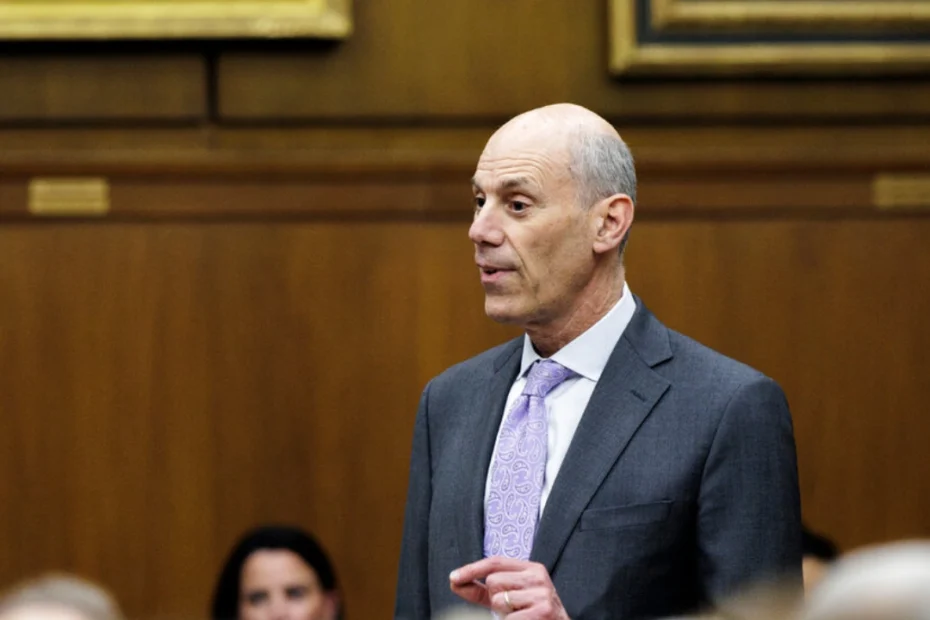
Contempt Case: A major legal fight in the United States has taken a new turn. A federal appeals court has ordered a lower court judge to stop his attempt to investigate whether officials from the Trump administration ignored court orders during controversial deportation flights.
This case has raised serious questions about government power, court authority, and immigration policies.
What Happened in This Case?
The issue began when James Boasberg, a federal judge in Washington, D.C., tried to hold government officials accountable for allegedly ignoring his order to pause deportations.
These deportations were carried out using the Alien Enemies Act, a very old law that allows the government to remove people during times of conflict. This law was used during the presidency of Donald Trump.
Judge Boasberg believed there was enough evidence to suspect that officials had willfully disobeyed his instructions, which could amount to criminal contempt of court.
Appeals Court Steps In
However, the United States Court of Appeals for the District of Columbia Circuit stepped in and blocked the investigation.
Two judges, Neomi Rao and Justin Walker, ruled that Judge Boasberg had gone too far.
They said his inquiry would dig into high-level government decisions related to national security and diplomacy, which courts should not interfere with easily.
According to them, continuing the investigation would be:
- An abuse of judicial power
- A threat to executive branch independence
- A process that would likely lead nowhere legally
Why the Deportations Were Controversial
The deportation flights involved migrants accused of links to a gang called Tren de Aragua. These individuals were sent to El Salvador, where they were kept in a high-security prison.
Judge Boasberg had ordered the flights to turn around temporarily while legal questions were being reviewed. But the flights continued, and the migrants were detained abroad for months.
Key Timeline of Events
| Event | What Happened | Impact |
|---|---|---|
| Court Order Issued | Judge ordered deportations paused | Legal conflict begins |
| Flights Continue | Migrants still sent to El Salvador | Possible violation |
| Appeals Filed | Trump officials challenge judge | Case delayed |
| Inquiry Planned | Judge seeks testimony from officials | Raises tensions |
| Appeals Court Ruling | Investigation shut down | Case halted |
Disagreement Among Judges
Not everyone agreed with the decision. Michelle Childs, who was appointed by Joe Biden, strongly disagreed.
She warned that stopping the investigation could weaken the power of courts in the future.
According to her:
- Contempt of court is a serious offense
- Courts must be able to enforce their orders
- Blocking such inquiries may harm democracy
Her dissent was long and detailed, showing how deeply divided the court was on this issue.
Government’s Response
The decision was welcomed by the administration. Acting Attorney General Todd Blanche said the ruling should end what he called a long and unnecessary effort by the judge.
The government argued that:
- Officials acted within their authority
- Orders were not clearly defined at the time
- National security concerns justified their actions
What Happens Next?
Lawyers representing the migrants, including those from the American Civil Liberties Union, are not backing down.
They plan to ask the full appeals court to review the decision again. This means the legal battle is not completely over.
Meanwhile, some migrants have already been released as part of international agreements, but the case continues to affect how future deportations may be handled.
Why This Case Matters
This case is not just about deportation flights. It is about a bigger question:
Can government officials ignore court orders during national security actions?
The answer could shape:
- Future immigration policies
- Balance of power between courts and government
- Rights of individuals facing deportation
Conclusion
This legal fight shows how complex the relationship between courts and government can be. While Judge Boasberg tried to ensure that his orders were followed, the appeals court believed he crossed a line by investigating executive decisions too deeply. The disagreement among judges highlights how divided opinions are on this issue.
As the case may continue in higher courts, it could set an important example for how laws are enforced in the future. In simple terms, this is about whether rules apply equally to everyone, even those in power. The final outcome could impact not just immigration cases but the overall strength of the legal system in maintaining accountability.