









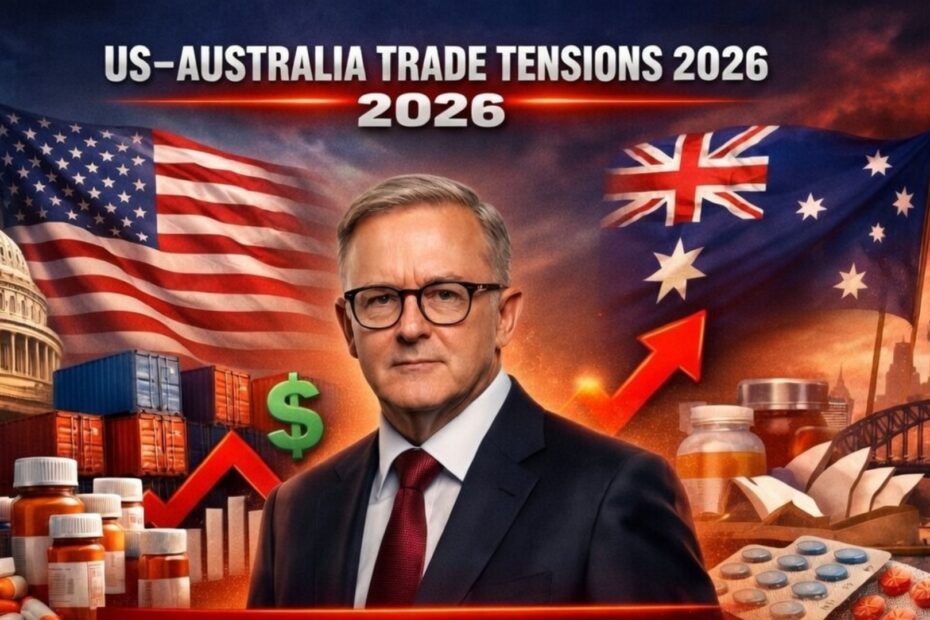
The 2026 US–Australia trade tensions have intensified after the United States introduced tariffs of up to 100% on imported patented pharmaceuticals.
This policy is aimed at reducing high drug prices in the US and boosting domestic production, but it has raised serious concerns about global supply chains, pricing stability, and healthcare access.
What Triggered the Pharma Trade Conflict?
In early 2026, the US government announced a strict tariff policy targeting high-cost patented drugs from countries that do not align with its pricing reforms.
- Around 13 major pharmaceutical companies pledged nearly $400 billion in US-based investments to avoid these tariffs.
- While some countries face lower tariff rates (10–15%), Australia is among those facing the highest tariffs.
Australia has strongly opposed the move and refused to alter its Pharmaceutical Benefits Scheme (PBS), a system that ensures affordable medicines for citizens.
Key Facts & Figures
| Factor | Details (2026) |
|---|---|
| Tariff Rate | Up to 100% on patented drugs |
| Pharma Investments | $400 billion pledged globally |
| Australia Exports to US | Approx. $1.3 billion annually |
| Generic Drugs | Mostly exempt |
| Compliance Period | 120–180 days |
| US Drug Spending | Over $600 billion per year |
Impact on Drug Prices
1. United States
- Tariffs may increase short-term drug prices as import costs rise.
- The government expects long-term price reductions through negotiations and local production.
2. Australia
- The government confirmed no increase in domestic drug prices under PBS.
- Australia continues to prioritize affordable healthcare over trade pressure.
3. Global Market
- Potential supply disruptions and reduced exports for affected countries.
- Increased uncertainty for pharmaceutical companies operating globally.
Why the US Is Targeting Pharma Pricing
The US faces some of the highest prescription drug prices in the world, with nearly 1 in 4 patients struggling to afford medications. The tariff policy aims to:
- Enforce fair pricing models
- Promote local drug manufacturing
- Reduce dependence on foreign pharmaceutical imports
The US–Australia pharma trade tensions in 2026 highlight a growing conflict between cost control and global trade dynamics.
While the US seeks to lower drug prices and strengthen domestic production, the policy may lead to higher costs, supply chain disruptions, and strained international relations.
Australia’s firm stance on protecting affordable medicines underscores the global debate over healthcare accessibility versus market-driven pricing.
FAQs
Why are pharma tariffs being introduced in 2026?
To reduce drug prices in the US and encourage local manufacturing.
Will these tariffs affect medicine prices globally?
They may impact global supply chains, but major price increases are expected mainly in the US.
Are all pharmaceutical products affected?
No, generic medicines are largely exempt, while patented drugs face the highest tariffs.