



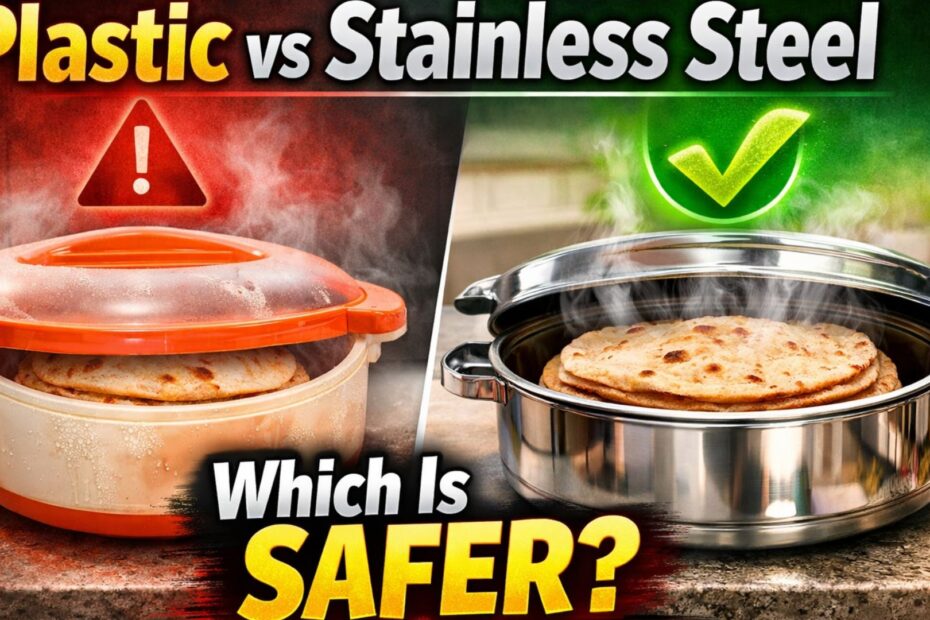
Storing soft and fresh rotis is essential in every Indian household, but the choice between plastic and stainless steel casseroles can directly impact health, hygiene, and food safety. With increasing awareness about toxic materials and safe food storage, many people are reconsidering their kitchen choices.
Why the Right Casserole Matters
Rotis are usually stored while still warm, creating heat and moisture inside the container. This environment can trigger chemical reactions or bacterial growth, depending on the material used. Therefore, selecting a safe casserole is crucial for maintaining both food quality and health standards.
Plastic Casseroles: Benefits and Risks
Plastic casseroles are commonly used due to their affordability and convenience.
Advantages
- Lightweight and easy to carry
- Budget-friendly
- Decent heat retention for short durations
Disadvantages
- May release harmful chemicals like BPA and phthalates when exposed to heat
- Prone to scratches that can trap bacteria and odors
- Can degrade over time, especially with frequent washing and heating
- May affect the taste and texture of rotis due to trapped steam
Even high-quality plastic can slowly break down, increasing the risk of contamination over repeated use.
Stainless Steel Casseroles: Benefits and Limitations
Stainless steel is widely regarded as a safer and more durable option.
Advantages
- Non-toxic and chemically stable, even with hot food
- Non-porous surface prevents bacterial buildup
- Extremely durable and long-lasting
- Does not absorb odors or stains
- Environmentally friendly and 100% recyclable
Disadvantages
- Slightly more expensive initially
- Not suitable for microwave use
Food-grade stainless steel is known for maintaining food purity and hygiene, making it ideal for daily use.
Plastic vs Stainless Steel: Comparison
| Feature | Plastic Casserole | Stainless Steel Casserole |
|---|---|---|
| Health Safety | Risk of chemical leaching | Non-toxic and safe |
| Durability | Wears out over time | Highly durable |
| Hygiene | Can harbor bacteria | Non-porous and hygienic |
| Heat Safety | Unsafe for hot storage | Safe for hot rotis |
| Odor Retention | Absorbs smells | Odor-resistant |
| Eco-Friendliness | Harmful to environment | Recyclable and sustainable |
| Cost | Affordable | Higher upfront, long-term value |
Which One Should You Choose?
For storing hot, freshly made rotis, stainless steel casseroles are the safer and healthier choice. They ensure zero chemical exposure, better hygiene, and longer durability.
Plastic casseroles can be used occasionally for cool or short-term storage, but they are not ideal for everyday use with hot food.
Choosing between plastic and stainless steel casseroles is not just about convenience—it’s about long-term health and food safety. While plastic may seem economical, its potential risks make it less reliable.
Stainless steel casseroles stand out as the best option, offering superior hygiene, durability, and peace of mind. Investing in a quality stainless steel casserole is a smart and safe choice for every kitchen.
FAQs
Can plastic casseroles be used daily for rotis?
They can be used, but regular exposure to heat may increase health risks over time.
Why is stainless steel considered safer?
Because it is non-reactive, toxin-free, and resistant to bacteria buildup.
Do stainless steel casseroles keep rotis soft?
Yes, they retain heat effectively and maintain roti freshness without compromising safety.